“I think my ducts need cleaning” is a call we get constantly — and quite often, cleaning isn’t what the home actually needs. Duct repair in Ottawa and duct cleaning are different services solving different problems, and paying for the wrong one means the symptom that prompted the call comes right back.
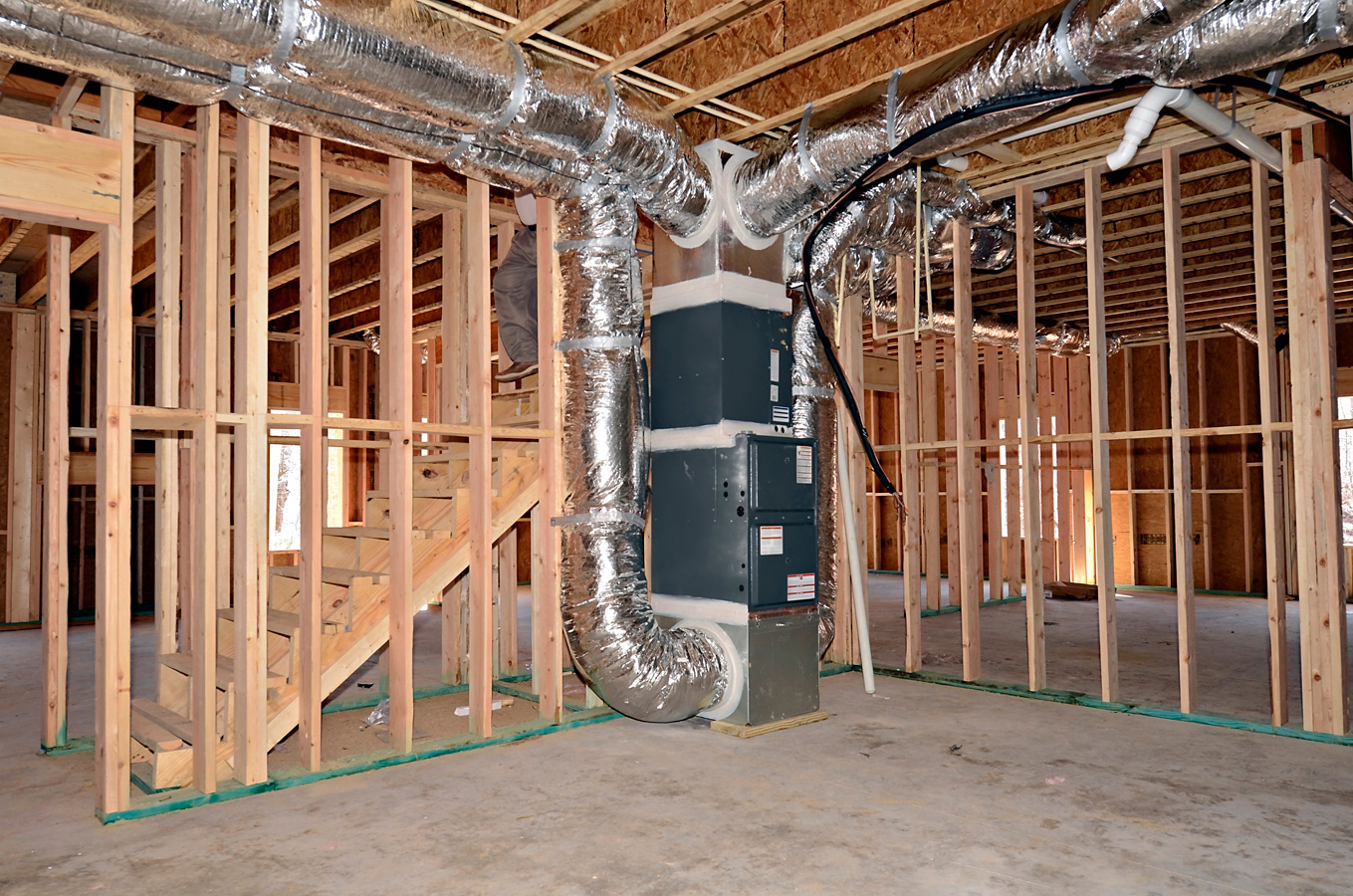
Here’s what each service does, what it doesn’t do, and how to tell which one your home is asking for.
What Duct Cleaning Actually Does
Duct cleaning removes accumulated dust, debris, and contaminants from inside your duct system. A technician uses specialized vacuum equipment and agitation tools to dislodge and extract buildup from the supply and return runs.
It’s worth doing when there’s genuine contamination: after renovation work that sent drywall dust through the system, following water intrusion, when there’s visible mould growth, or if there’s evidence of rodents or insects in the ductwork.
What it doesn’t do is change how your duct system performs. Clean ducts that are undersized, badly laid out, or leaking will move exactly as much air after cleaning as before.
What Duct Repair Addresses
Duct repair fixes the physical condition of the system: sealing leaks at joints and seams, reconnecting sections that have separated, replacing crushed or damaged runs, adding insulation where ducts pass through unconditioned space, and correcting undersized branches.
Duct leakage is the big one. In a typical home, a meaningful share of the conditioned air your system produces never reaches a register — it escapes through gaps into attics, crawl spaces, and wall cavities. You paid to heat or cool that air, and it went nowhere useful.
Repair changes performance. Cleaning changes cleanliness. They’re not substitutes for each other.
Signs You Need Duct Cleaning
- Visible dust puffing out of registers when the system starts
- You’ve just completed a renovation, especially any drywall work
- Evidence of rodents or insects in or around the ductwork
- Visible mould on register grilles or inside accessible duct sections
- A persistent musty smell that appears whenever the fan runs
- The system was flooded or water-damaged
- Ducts have never been cleaned in a home that’s several decades old
Note that general household dust is not, on its own, a reason for duct cleaning. Some dust in ducts is normal and doesn’t affect performance or air quality meaningfully.
Signs You Need Duct Repair
- Some rooms are consistently warmer or cooler than others
- Weak airflow at certain registers regardless of season
- Whistling, rattling, or booming noises when the system cycles
- Energy bills that seem high for how much you run the system
- Visible gaps, disconnected sections, or crushed flexible duct
- Rooms that never seem to reach the thermostat setting
- Excessive dust in the home even after cleaning the ducts
That last one is telling: if you cleaned the ducts and the dust came back quickly, the system is probably pulling unfiltered air in through leaks on the return side. Cleaning again won’t help. Sealing will. Persistent low airflow in Ottawa homes is almost always a repair problem rather than a cleaning problem.
Why Older Ottawa Homes Often Need Repair
A great many Ottawa homes have ductwork that was installed for a gravity furnace decades ago and adapted over the years for forced air, then adapted again when central cooling was added.
The result is systems that were never designed as a whole: oversized trunk lines feeding undersized branches, sharp turns that strangle airflow, sections added during a basement finish that don’t match the rest, and joints sealed with duct tape that dried out and let go years ago.
Cleaning that system leaves you with a clean version of the same problem. Proper duct installation and repair in Ottawa addresses the design, not just the dirt.
How Leaky Ducts Affect the Rest of Your System
Duct problems don’t stay contained to the ducts. Restricted airflow raises static pressure, which strains the blower motor. It can cause the evaporator coil to freeze in summer and the heat exchanger to overheat in winter.
Systems fighting bad ductwork also tend to cycle irregularly, which is one of the less obvious contributors to HVAC short cycling in Ottawa. The equipment gets blamed for a problem the distribution system is causing.
This is why replacing a furnace or air conditioner without assessing the ducts sometimes disappoints. New equipment on compromised ductwork still can’t deliver air where it needs to go.
Getting an Honest Assessment
The way to settle the question is an inspection rather than a guess. A technician should visually inspect accessible ductwork, measure airflow at registers, check static pressure, and look for the specific failure points common in homes of your era and construction.
Be cautious of anyone who quotes duct cleaning over the phone without seeing the system, or who produces dramatic before-and-after photos of a duct that isn’t yours. A legitimate assessment as part of HVAC services in Ottawa will tell you plainly if cleaning isn’t what you need.
When It’s Time to Replace Rather Than Repair
Sometimes the ductwork is beyond patching. Indicators include widespread deterioration, asbestos-containing insulation on older systems, ducts sized for equipment that was replaced two generations ago, or a layout so poor that no amount of sealing will deliver balanced airflow.
Replacement is a bigger project, and it usually makes most sense when it coincides with other work — a basement renovation, a furnace replacement, or a whole-home efficiency upgrade. Done at the right moment, it costs far less than doing it in isolation.
Frequently Asked Questions
How often should ducts be cleaned?
There’s no fixed schedule, because it depends on conditions rather than time. Homes with pets, smokers, allergy sufferers, or recent renovations benefit more often; a typical home with none of those may go many years without needing it. Cleaning on a rigid calendar schedule, whether or not there’s contamination, generally isn’t money well spent.
Will duct cleaning lower my energy bills?
Usually not meaningfully. Energy savings come from sealing leaks and correcting airflow restrictions — that’s repair work. Cleaning removes debris but doesn’t change how much conditioned air escapes before reaching your rooms. If lower bills are the goal, a duct leakage assessment is the more productive place to start.
Can I seal duct leaks myself?
You can seal accessible joints with mastic or foil-backed tape — not standard cloth duct tape, which dries out and fails. The limitation is that most leakage happens in places homeowners can’t reach: inside walls, above finished ceilings, and at connections behind the furnace. DIY sealing helps at the margins but rarely resolves a significant leakage problem.
Does duct cleaning help with allergies?
It can when there’s genuine contamination — mould growth, rodent debris, or heavy particulate after construction. For ordinary household dust, upgrading your filter and addressing return-side leaks that pull in unfiltered air from basements and crawl spaces usually does more for indoor air quality than cleaning the ducts does.
Should I clean my ducts before or after a renovation?
After. Renovation work — especially drywall sanding — sends fine dust throughout the system, and cleaning beforehand just means cleaning again. Seal off registers during the work to limit how much gets in, then clean once the dust has settled and the project is finished.
Final Takeaway
Cleaning addresses what’s in your ducts. Repair addresses what your ducts are doing. If your complaint is uneven temperatures, weak airflow, noise, or high bills, cleaning won’t fix it — those are repair symptoms.
Get the system inspected before you book either service. The right answer is often less expensive than the one you were about to pay for.
Book a Duct Assessment in Ottawa
Ultra Air Heating & Cooling
53 Kinetic Way, Ottawa, ON K2J 0E1
Phone: (613) 762-3035
Book Online: ultraairhvac.ca/contact-us
Uneven temperatures or weak airflow in some rooms? Contact Ultra Air today for a proper duct inspection and a straight answer on whether you need cleaning, repair, or neither.