You go downstairs to grab something from the basement and find a puddle beside the furnace. Or you notice a damp patch on the ceiling below where the indoor unit sits. An AC leaking water in Ottawa homes is one of the most common summer service calls we get — and one of the most misunderstood.
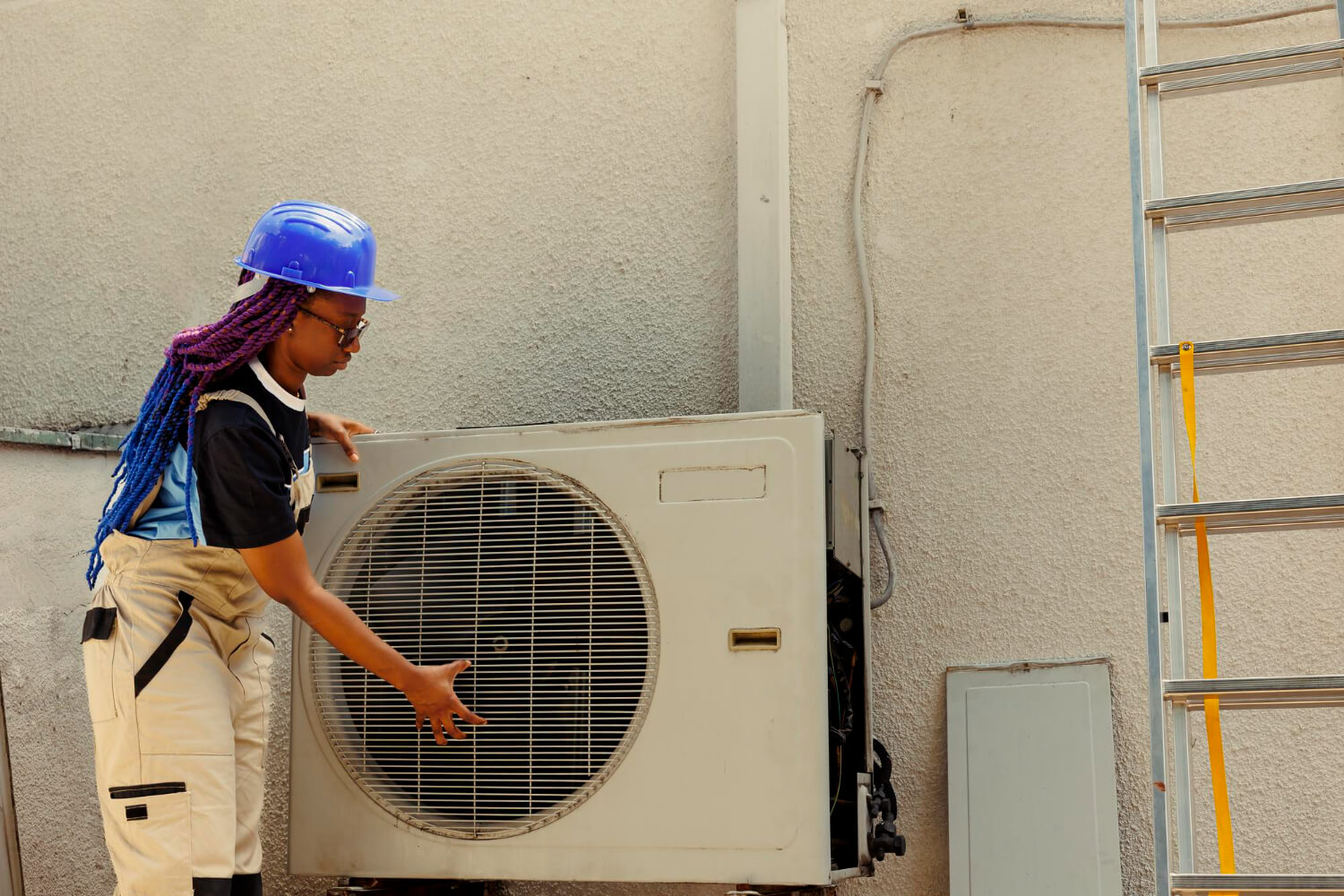
Some water around your air conditioner is completely normal. Water where it shouldn’t be is not. Knowing the difference tells you whether you’re looking at a fifteen-minute fix or a problem that needs a technician today.
First, Some Water Is Supposed to Be There
Your air conditioner doesn’t just cool air — it removes humidity from it. Warm, moist indoor air passes over a cold evaporator coil, and moisture condenses out of it exactly the way it beads on a cold drink in July.
On a humid Ottawa day, a working system can pull several litres of water out of your home’s air. That water collects in a drain pan and exits through a condensate drain line. When everything works, you never see it.
So the question isn’t whether your AC produces water. It’s why that water isn’t going where it’s supposed to go.
Cause 1: A Clogged Condensate Drain Line
This is the most common cause by a wide margin. The condensate line is a narrow PVC pipe, it stays damp, and over time it grows algae, mould, and sludge. Eventually it blocks.
When the line clogs, the drain pan fills and overflows — usually right onto whatever is underneath. Many systems have a safety float switch that shuts the AC off when the pan fills, so a clogged drain sometimes shows up as a system that stops cooling rather than as visible water.
Some homeowners can clear a light clog with a wet/dry vacuum at the outdoor end of the drain line. If that doesn’t work, or if you can’t locate the line, it’s a service call.
Cause 2: A Frozen Evaporator Coil
If the coil freezes into a block of ice and then thaws, the meltwater overwhelms the drain pan and spills. The leak is a symptom; the freeze is the actual problem.
Coils freeze for two main reasons: restricted airflow (a dirty filter, blocked return vents, a failing blower) or low refrigerant. Both cause the coil to run colder than designed until condensation turns to ice.
If you see ice, turn the system off and let it thaw completely before running it again. Then check your filter. If the filter was clean, or the coil freezes again after you replace it, the cause is more likely refrigerant — and that needs a technician.
Cause 3: A Cracked or Rusted Drain Pan
Drain pans don’t last forever. On systems past the fifteen-year mark, the pan can rust through or crack, and water escapes before it ever reaches the drain line.
The tell here is that the leak is steady rather than intermittent, and clearing the drain line changes nothing. Replacement pans are available for most systems, though on a system of that age it’s worth discussing whether continued repairs make sense.
Cause 4: A Failed Condensate Pump
If your indoor unit sits below the level of the nearest drain — common in Ottawa basements — a small pump moves the condensate up and out. When that pump fails, water has nowhere to go.
You can often test it by pouring a cup of water into the pump reservoir. If the pump doesn’t kick on, it needs replacing. It’s a relatively inexpensive part, but leaving it failed means water on your basement floor every time the AC runs.
Cause 5: Low Refrigerant — The One to Take Seriously
Low refrigerant causes the coil to run too cold, which causes freezing, which causes leaking. But refrigerant doesn’t get “used up” the way fuel does. A sealed system that’s low on refrigerant has a leak somewhere.
Simply topping up the charge treats the symptom and guarantees you’ll be doing it again. The leak needs to be found and repaired. If your system is also struggling to cool, that combination — water plus an AC not cooling properly — points strongly at refrigerant.
This one isn’t a DIY job. Handling refrigerant requires certification, and diagnosing a leak requires equipment most homeowners don’t have.
What You Can Safely Check Yourself
Before calling, run through this list:
- Turn the system off at the thermostat to stop adding water to the problem
- Check the air filter — if it’s grey and matted, replace it
- Look for ice on the coil or the refrigerant lines
- Confirm the vents are open and nothing is blocking the return
- Check the condensate pump if you have one
- Look at the drain line outside for standing water or an obvious blockage
Anything beyond this — opening the sealed refrigerant circuit, replacing the pan, chasing an electrical fault — belongs to a technician. Detailed guidance on AC leaking water in Ottawa can help you narrow it down before you book.
When a Leak Becomes Urgent
Most condensate leaks are a nuisance rather than an emergency. Treat it as urgent when:
- Water is reaching drywall, insulation, or finished flooring
- The leak is near electrical panels or wiring
- You’re seeing refrigerant oil — an oily residue rather than clear water
- The system has stopped cooling entirely
- There’s a strong musty smell, suggesting the water has been there a while
In those situations, shut the system down and arrange emergency HVAC service in Ottawa. Water damage compounds quickly, and the repair bill grows with it.
Frequently Asked Questions
Is it normal for my AC to drip water outside?
Yes. Water dripping from the condensate drain line outside your home is exactly what should happen — that’s the humidity your system pulled out of your indoor air. On a hot, humid Ottawa day you may see a steady trickle. What isn’t normal is water inside the house, around the indoor unit, or pooling where the drain line should be carrying it away.
Can I run my AC while it’s leaking?
It’s better not to. Running the system keeps producing condensate, which keeps feeding the leak and increases the risk of water damage. If the cause is a frozen coil, running it also risks damaging the compressor. Shut the system off at the thermostat, let any ice thaw completely, and check the filter before deciding whether to restart it.
Why does my AC only leak on very humid days?
Because humidity is what your system is removing. On a muggy day it pulls far more moisture out of the air than on a dry one, which means more water flowing through the drain. A partially clogged drain line can keep up on a dry day and overflow on a humid one. The clog is still there — the humid weather just exposes it.
How much does it cost to fix an AC leak in Ottawa?
It depends entirely on the cause. Clearing a clogged condensate line is at the inexpensive end. Replacing a condensate pump or a drain pan sits in the middle. Finding and repairing a refrigerant leak is the most involved, because it requires locating the leak, repairing it, and recharging the system. An accurate quote requires a diagnosis first.
Could a leaking AC cause mould in my home?
It can, if the water sits long enough. Moisture in drywall, insulation, or subfloor creates conditions mould needs, and a slow leak behind a wall or above a ceiling can go unnoticed for weeks. That’s the main reason we treat leaks reaching building materials as urgent rather than routine — the water damage often costs more than the AC repair.
Final Takeaway
A leaking air conditioner usually comes down to one of five things: a clogged drain line, a frozen coil, a damaged pan, a failed pump, or low refrigerant. The first is common and often minor. The last is the one that tells you something is genuinely wrong.
Start by turning the system off and checking the filter — that alone resolves a meaningful share of calls. If the leak returns, or if you see ice or oily residue, get it diagnosed before the water finds something expensive.
Get Your Leaking AC Diagnosed in Ottawa
Ultra Air Heating & Cooling
53 Kinetic Way, Ottawa, ON K2J 0E1
Phone: (613) 762-3035
Book Online: ultraairhvac.ca/contact-us
Water where it shouldn’t be? Contact Ultra Air today and we’ll find the cause, fix it properly, and make sure it isn’t quietly damaging your home.