Replacing a furnace is one of the larger pieces of work most Ottawa homeowners will have done to their house, and it happens rarely enough that almost nobody knows what the day actually involves. That uncertainty is why people delay. Knowing how furnace installation in Ottawa really unfolds — what happens before, during, and after — makes it a manageable project rather than an unknown.
Here is the honest sequence, from the first site visit to the paperwork that follows.
The Site Visit Comes First, and It Matters More Than the Quote
Any installer who gives you a firm price without seeing your house is guessing. A proper assessment takes a while and covers more than the furnace itself.
The technician should measure the house and perform a heat loss calculation rather than simply matching the capacity of your existing unit. That old unit may well have been oversized when it went in, and copying its rating just repeats the mistake for another twenty years.
They should also examine the ductwork, the venting route, the gas line capacity, the electrical supply, and the physical access to the mechanical room. Any of these can change the scope of the job, and finding out on installation day is how a one-day project becomes a three-day one.
Expect questions about how the house actually behaves: which rooms are cold, whether the current system runs constantly in January, and whether you are planning other changes such as adding air conditioning or considering heat pump installation in Ottawa as part of a longer-term plan.
Sizing Is the Decision That Determines Everything Else
The single most consequential number in the whole project is the furnace capacity, and bigger is not better.
An oversized furnace heats the house quickly, satisfies the thermostat, and shuts off — then repeats that cycle all day. Short cycling produces uneven temperatures, more wear on the ignition and blower components, and worse humidity control than a correctly sized unit running longer, gentler cycles.
An undersized furnace has the opposite problem: it simply cannot keep up during a deep Ottawa cold snap, which is precisely when you need it most.
A heat loss calculation accounts for square footage, insulation levels, window area and quality, air tightness, ceiling heights, and our design temperature. It is not a formality, and an installer who does it properly is telling you something about how they work.
Choosing the Equipment
Once sizing is settled, the remaining choices are efficiency level and blower type.
Efficiency is expressed as AFUE, the percentage of fuel converted to usable heat. High-efficiency condensing furnaces vent through PVC pipe out a side wall rather than up the chimney, which is why switching from a mid-efficiency unit sometimes involves venting changes and chimney liner considerations.
The blower matters more than most people expect. A variable-speed blower runs at lower speeds most of the time, which is quieter, distributes heat more evenly through the house, and uses noticeably less electricity than a single-speed motor that is either fully on or fully off.
Because the cost difference between tiers is real, it is worth understanding what furnace financing in Ottawa looks like before you decide, rather than defaulting to the cheapest option and living with it for two decades.
Preparing the House Before Installation Day
Your part is straightforward but genuinely helps.
- Clear a path from the entry door to the mechanical room — the old unit comes out and a new one goes in, both awkwardly
- Clear the work area of stored items within a few feet of the furnace
- Plan for pets, since doors will be propped open for hours
- Expect no heat for most of the day, which is why late summer and early fall are the ideal months for this work
- Confirm parking if you are on a street with restrictions
Protective coverings on floors and stairs are normal practice, but it is reasonable to confirm that before the crew starts.
What Installation Day Actually Looks Like
A straightforward replacement typically runs six to ten hours. Jobs involving venting changes, ductwork modification, or a difficult mechanical room can extend into a second day.
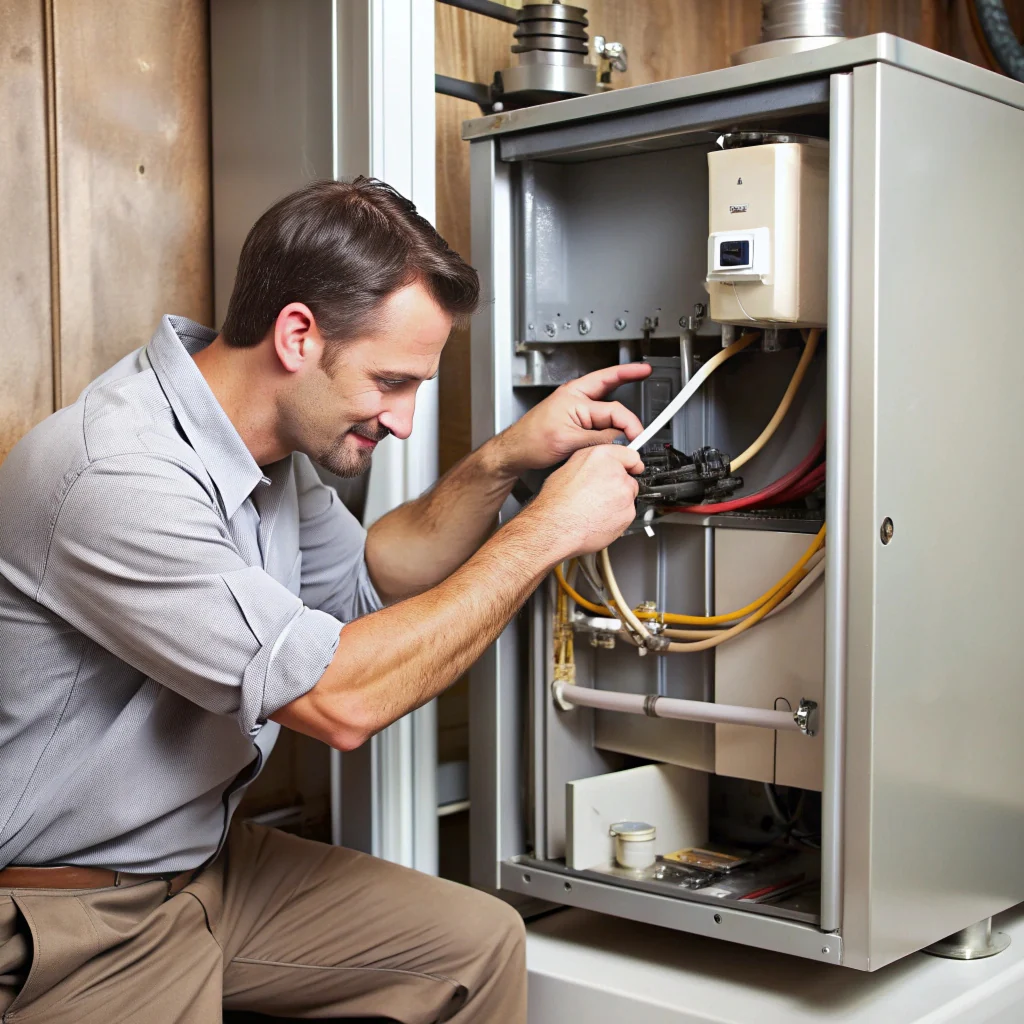
The sequence is consistent. The crew shuts off gas and electrical supply and disconnects the old unit. They remove it — often the noisiest part of the day. They set the new furnace in place and level it, then connect the plenum and ductwork, gas line, electrical supply, venting, and condensate drain.
Then comes commissioning, which is the part that separates a good installation from an adequate one: pressure-testing the gas connections, measuring gas pressure and adjusting it to specification, verifying temperature rise across the heat exchanger, testing safety controls, and confirming the thermostat operates the system correctly through a full cycle.
You should be shown the finished work, the filter location and size, the emergency shutoff, and the basic thermostat operation before the crew leaves. If something was found mid-job that changed the scope, that should be explained to you at the time and not appear as a surprise on the invoice.
Permits, Inspection, and Paperwork
Furnace replacement in Ontario requires a licensed gas technician, and gas work is regulated for good reason. Your installer handles the permit and any required inspection.
Keep the documentation you receive. The manufacturer warranty registration usually has a deadline measured in weeks after installation, and missing it can reduce your coverage. Warranty terms differ between parts and labour, and the two are not the same thing.
Ask specifically what maintenance the warranty requires. Many manufacturers require documented annual service to keep parts coverage valid, which means keeping records of every visit.
The First Few Weeks
A new furnace will smell faintly of burning dust the first few times it runs. That is manufacturing oils burning off the heat exchanger, it is normal, and it clears within a few cycles.
What you should notice: quieter operation, longer and more even heating cycles, and more consistent temperatures between rooms. What you should not notice: banging on startup, rooms that suddenly run much hotter or colder than before, or a system that cycles every few minutes.
If anything seems wrong in the first weeks, call the installer rather than waiting. Adjustments during the settling-in period are ordinary and expected. Ongoing furnace repair in Ottawa should not be part of the picture for a new system, so early problems are worth resolving immediately while everything is fresh.
Frequently Asked Questions
How long does a furnace installation take?
A straightforward replacement in an accessible mechanical room usually takes six to ten hours — a single working day. Jobs that involve changing the venting configuration, modifying ductwork, upgrading the gas line, or working in a cramped space can run into a second day. Your installer should tell you which category your job falls into after the site visit.
What is the best time of year to replace a furnace in Ottawa?
Late summer through early fall. You are without heat for most of the installation day, which is uncomfortable in November and irrelevant in September. Scheduling is also easier before heating season begins, and you avoid making a rushed decision during a mid-winter failure.
Will I need new ductwork with a new furnace?
Usually not entirely, but modifications are common. The plenum connections almost always need adapting to the new unit, and if the existing ducts are undersized for the required airflow, sections may need resizing. A full duct replacement is uncommon in a straightforward furnace swap and would be flagged during the site assessment.
Can I keep my existing thermostat?
Often yes, but not always. Modern furnaces with variable-speed or multi-stage operation need a thermostat that can actually control those stages, and an older single-stage thermostat will leave you paying for capability you cannot use. Your installer will confirm compatibility during the assessment.
Does a new furnace need service in its first year?
Yes. Most manufacturer warranties require documented annual maintenance to keep parts coverage valid, and the first service also catches anything that has settled or drifted since installation. Skipping it to save money in year one can cost considerably more if a warranty claim is later denied.
Final Takeaway
A good furnace installation is decided before anyone picks up a tool. The heat loss calculation, the venting plan, and the commissioning at the end are what determine whether the system runs well for twenty years or becomes a recurring annoyance.
The equipment brand matters far less than most homeowners assume. The quality of the installation matters far more. When you collect quotes for furnace installation in Ottawa, ask about sizing methodology and commissioning procedure — the answers tell you most of what you need to know.
Planning a Furnace Replacement in Ottawa?
Ultra Air Heating & Cooling
53 Kinetic Way, Ottawa, ON K2J 0E1
Phone: (613) 762-3035
Book Online: ultraairhvac.ca/contact-us
Contact Ultra Air to arrange a proper in-home assessment and a quote based on your actual heat loss — while there is still time to do the work before the cold arrives.