Ottawa winters are dry in a way that surprises newcomers. Static shocks off every doorknob, cracked lips that never quite heal, a scratchy throat every morning, and hardwood floors that develop gaps by February. Most of that traces back to indoor humidity — and humidifier installation in Ottawa addresses it at the source.
Here’s why our winters get so dry, what humidity levels you’re aiming for, and how whole-home systems compare to the portable units most people try first.
Why Ottawa Winter Air Gets So Dry
The physics are straightforward once explained. Cold air holds far less moisture than warm air. When outdoor air at minus 20°C — already carrying very little water — enters your home and gets heated to room temperature, its relative humidity plummets.
Heating doesn’t remove moisture. It increases the air’s capacity to hold moisture without adding any, so the same amount of water is spread across much greater capacity. The result is air that’s aggressively dry.
Every home exchanges air with outside continuously, so this isn’t something you can seal your way out of entirely. In an Ottawa January, indoor humidity without a humidifier commonly sits well below comfortable levels.
What Dry Air Actually Does
To your comfort: dry air accelerates evaporation from your skin, which makes you feel cooler at the same temperature. Many households compensate by raising the thermostat — effectively paying to solve a humidity problem with heat.
To your health: dry air irritates nasal passages, throats, and eyes. It aggravates asthma and allergy symptoms, worsens eczema and dry skin, and dries out the mucous membranes that form part of your body’s defence against airborne irritants.
To your home: wood loses moisture and shrinks. Hardwood floors develop gaps, trim separates at the joints, doors and drawers shift out of alignment, and furniture joints loosen. Pianos and stringed instruments go out of tune constantly.
To everyday life: static electricity, which is annoying with doorknobs and genuinely risky around sensitive electronics.
The Humidity Range You’re Aiming For
The comfortable and healthy target for most homes sits in the range of roughly 30 to 50 percent relative humidity.
In an Ottawa winter, the practical target moves toward the lower end of that range, and it needs to move with the outdoor temperature. During extreme cold, humidity that would be perfectly comfortable in milder weather causes condensation on windows — and sustained condensation leads to mould, rot in window frames, and moisture in wall cavities.
The rule of thumb: if your windows are running with condensation, lower the humidity setting. Window condensation is the most visible early warning that you’ve overdone it, and it’s the signal to adjust rather than ignore.
Homes with older single-pane or poorly sealed windows tolerate less humidity than homes with modern sealed units, so the right setting is specific to your house.
Whole-Home vs Portable Humidifiers
Portable units are inexpensive, need no installation, and can be moved where you need them. They’re a reasonable choice for a single bedroom.
Their limitations show up quickly at whole-house scale. They need refilling constantly — often daily. They require regular cleaning, and a neglected portable humidifier becomes a source of bacteria and mineral dust rather than a solution. They treat one room. And several running throughout a house is both inconvenient and surprisingly noisy.
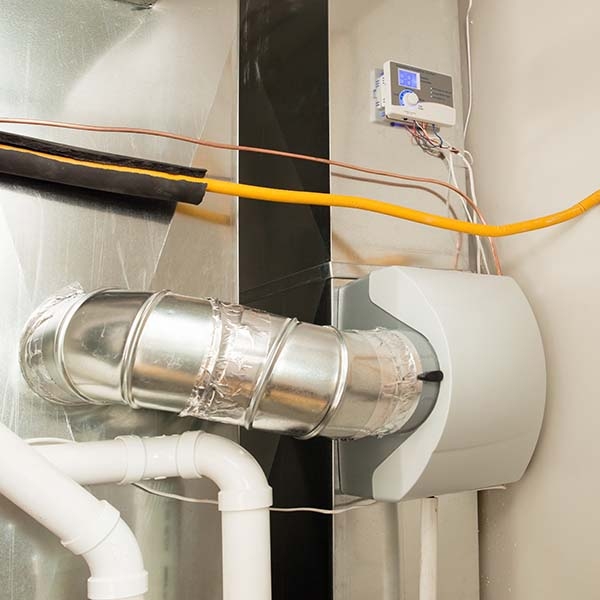
Whole-home humidifiers install directly into your ductwork and humidify every room the furnace serves. They connect to your water supply, so there’s no refilling. They’re controlled by a humidistat that maintains a set level automatically, and they’re essentially silent because they have no separate fan.
The tradeoff is installation cost and the requirement for ductwork. Professional humidifier installation in Ottawa integrates the unit with your existing furnace and controls.
Types of Whole-Home Humidifiers
Bypass humidifiers use your furnace’s blower to move air across a water panel, adding moisture by evaporation. Simple, reliable, no separate fan. They only humidify when the furnace is running.
Fan-powered humidifiers include their own fan, so they can operate independently of the furnace cycle. That means more capacity and better control, at somewhat higher cost.
Steam humidifiers boil water and inject steam directly into the ductwork. They deliver the most capacity and the most precise control, work independently of heating, and suit large homes or ones with high air exchange — at the highest cost to buy and run.
For most Ottawa homes, a bypass or fan-powered unit handles the job. Steam becomes worth considering for large or particularly leaky houses where the others can’t keep up.
Your Ductwork Affects the Result
A whole-home humidifier distributes moisture through your duct system, so the quality of that system determines how evenly it works.
If your ducts leak, some of the humidified air ends up in attics and crawl spaces instead of your living areas — which wastes the moisture and can create condensation problems in unconditioned spaces.
If certain rooms already get poor airflow, they’ll also get less humidity, and you’ll be fighting an uneven result. Addressing duct repair in Ottawa before or alongside humidifier installation usually produces a much better outcome than installing into a compromised system.
Maintenance Matters More Than People Expect
A neglected humidifier can make indoor air worse rather than better. The tasks are simple but not optional:
- Replace the water panel or evaporator pad annually — usually at the start of heating season
- Clean mineral scale from the unit; Ottawa water leaves deposits
- Check the humidistat is reading accurately
- Inspect the drain line for clogs
- Shut the water off in spring when heating season ends, so it isn’t running through summer
Most of this can be bundled into an annual furnace visit. Since you should be booking HVAC services in Ottawa before heating season anyway, having the humidifier serviced at the same time is the practical approach.
Signs Your Home Needs One
You’re likely a good candidate if you notice, specifically in winter:
- Frequent static shocks
- Dry, itchy skin and cracked lips that improve in summer
- Waking with a dry throat or nosebleeds
- Gaps opening in hardwood floors or trim
- Houseplants struggling despite adequate watering
- Feeling cold at thermostat settings that used to feel fine
- Instruments going out of tune constantly
The seasonal pattern is the diagnostic clue. Symptoms that appear in November and resolve in April are almost always humidity, not something else.
Frequently Asked Questions
What humidity level should I set in an Ottawa winter?
Somewhere in the 30 to 50 percent range, moving toward the lower end as it gets colder outside. The practical guide is your windows: if condensation is forming and staying, the setting is too high for the current outdoor temperature. Homes with older windows need lower settings than those with modern sealed units.
Can too much humidity damage my home?
Yes. Excessive humidity in cold weather causes condensation on windows and inside wall cavities, which leads to mould growth, rot in window frames and sills, and deterioration of building materials. That’s why the setting needs to move with outdoor temperature rather than staying fixed all winter.
Do I still need a humidifier if I have a newer, tighter home?
Often yes, though possibly at a lower setting. Tighter homes exchange less air with outside, which helps retain moisture, but they still lose humidity through ventilation and normal air exchange. The upside is that a tighter home usually needs less humidification capacity to maintain a comfortable level.
How much maintenance does a whole-home humidifier need?
The main task is replacing the water panel or evaporator pad annually, plus cleaning mineral scale and checking the drain. It’s straightforward and usually bundled into an annual furnace service visit. What matters is that it actually gets done — a neglected humidifier can degrade air quality rather than improve it.
Should I turn my humidifier off in summer?
Yes. Ottawa summers are humid enough on their own, and running a humidifier adds moisture you don’t want — while your air conditioner works to remove it. Shut the water supply off and turn the humidistat down at the end of heating season, then reverse it in the fall.
Final Takeaway
Dry winter air is a genuine comfort and building-health issue in Ottawa, not just an annoyance. A whole-home humidifier addresses it consistently, without the refilling and cleaning that portable units demand.
The key is managing the level rather than maximizing it. Watch your windows, adjust as temperatures drop, and keep up with the annual maintenance.
Book Humidifier Installation in Ottawa
Ultra Air Heating & Cooling
53 Kinetic Way, Ottawa, ON K2J 0E1
Phone: (613) 762-3035
Book Online: ultraairhvac.ca/contact-us
Tired of static shocks and dry winter air? Contact Ultra Air today to discuss whole-home humidifier options sized and installed for your home.