
Water heaters rarely fail politely. Most give warnings for weeks or months, and most homeowners miss them — right up until the morning there’s water across the basement floor. Recognizing the signs early turns an emergency into a planned water heater replacement in Ottawa on your own schedule.
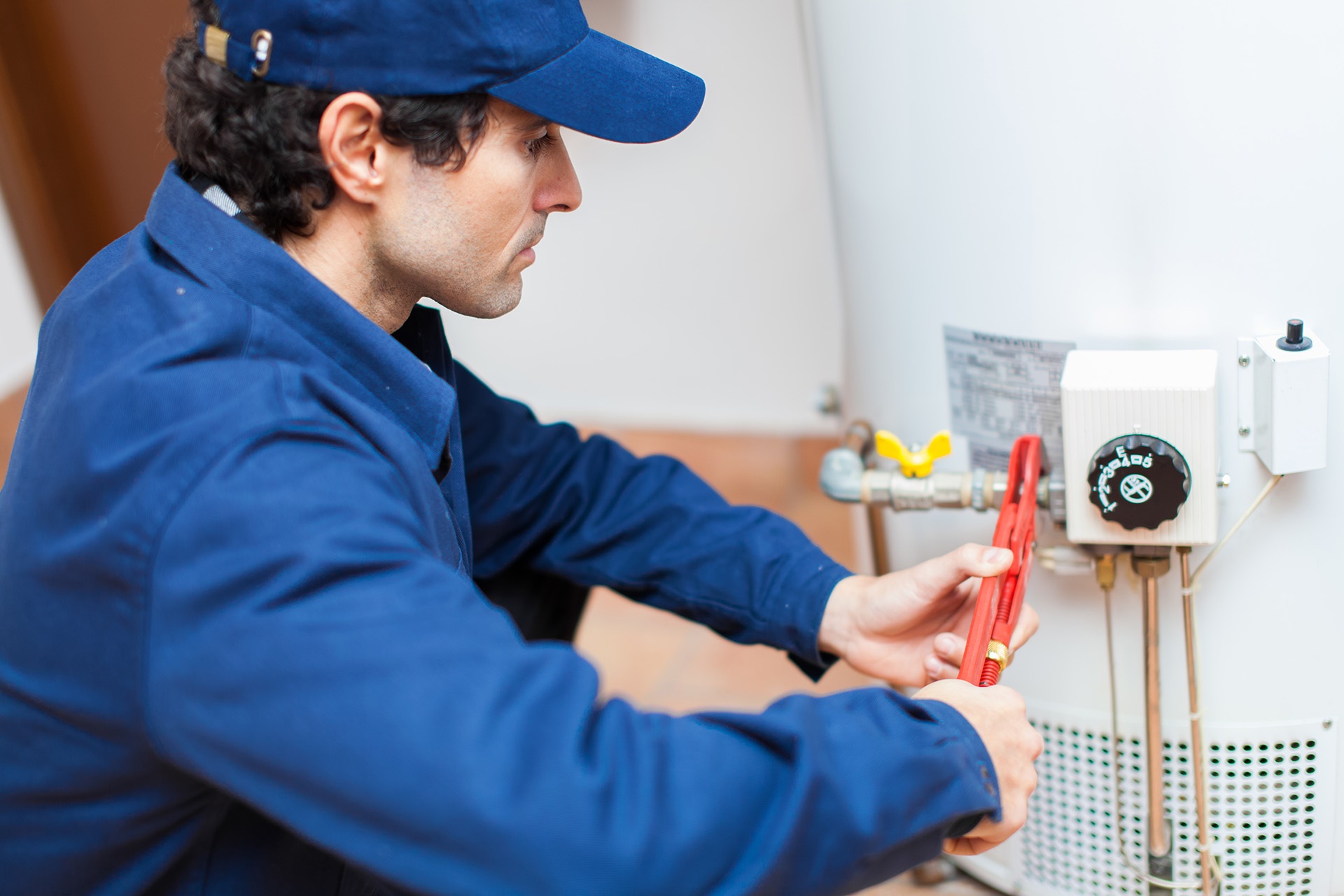
Here are the signals worth acting on, roughly in order of how urgently they matter.
Sign 1: Rusty or Discoloured Hot Water
If hot water runs brown, orange, or rusty — and cold water from the same tap runs clear — the rust is coming from inside your tank.
Tanks are steel with a protective glass lining, plus a sacrificial anode rod that corrodes so the tank doesn’t. When the anode is spent and the lining has failed, the steel itself starts rusting. Discoloured hot water means that process is already underway.
This is one of the more reliable indicators that replacement is coming. Once a tank is rusting internally, there’s no repair — it’s a question of when it leaks, not whether.
Sign 2: Rumbling, Popping, or Banging Noises
Sediment accumulates at the bottom of every tank over time — mineral deposits that settle out of the water and bake into a hardened layer above the burner.
Water trapped under that layer boils and forces its way through, producing the rumbling and popping many homeowners describe. The sediment also insulates the water from the burner, so the tank works harder and runs less efficiently.
Caught early, flushing can help. Once the deposit has hardened substantially, flushing does little and the sediment continues stressing the tank. Persistent water heater noise in Ottawa homes usually means significant buildup has already occurred.
Sign 3: Not Enough Hot Water, or Not Hot Enough
If showers that used to be comfortable now run out early, or the water never reaches the temperature it once did, something has changed.
Possible causes range from cheap to terminal: a failed heating element or thermostat (repairable), sediment reducing effective capacity (sometimes improvable), a dip tube failure (repairable), or a tank simply losing effectiveness with age.
The diagnostic question is whether household demand changed. If nothing changed and capacity dropped, the tank is telling you something. Complete loss of hot water is a different and more urgent situation — guidance on no hot water in Ottawa covers what to check first.
Sign 4: Any Moisture Around the Base
Take this one seriously even when it seems minor. A small puddle, a damp ring, or a bit of corrosion at the base can indicate a tank that has begun to fail.
Not all moisture means catastrophe — condensation happens on very cold incoming water, and a loose fitting or a discharging relief valve can produce water without the tank being compromised. Those are worth ruling out.
But if the moisture is coming from the tank body rather than a connection, that’s a failing tank. Tanks that leak slowly usually don’t stay slow. When they let go, a 200-litre tank empties onto your floor, and everything stored nearby goes with it.
Sign 5: Age Alone
Conventional tanks have a finite service life, and once yours is past the typical range, you’re on borrowed time even if nothing seems wrong.
Find the manufacture date — it’s usually encoded in the serial number on the label. If you don’t know how old yours is, that’s worth five minutes of investigation.
Age matters because it changes the repair calculation. Spending meaningful money on a repair to a tank near the end of its expected life is usually poor value; the same money toward replacement buys you a warranty and a fresh start.
Sign 6: Rising Energy Bills Without a Usage Change
Water heating is a large share of household energy use, and a declining water heater is inefficient. Sediment buildup, a failing element, or degraded insulation all mean more energy for the same hot water.
If your bills have crept up and your household hasn’t changed, an aging water heater is a reasonable suspect — particularly alongside any of the other signs here.
Sign 7: Repeated Repairs
One repair on a mid-life water heater is normal maintenance. Three in two years is a pattern.
At some point the accumulated repair spending exceeds what replacement would have cost, and you’re still left with an old tank. A useful rule: if the repair costs a substantial fraction of replacement and the unit is past mid-life, replace it.
Planning Replacement Instead of Reacting to It
The difference between planned and emergency replacement is significant. Planned, you compare options, get more than one quote, choose the right capacity, and schedule the work conveniently. In an emergency, you take whatever can be installed today.
Planning also opens the tankless question. Switching from a tank to a tankless water heater in Ottawa often requires gas line or venting changes — work that’s straightforward to plan and nearly impossible to arrange on a morning when your basement is flooding.
A full review of water heater installation and repair in Ottawa before you’re under pressure is time well spent.
Reducing the Damage If It Does Fail
A few inexpensive precautions:
- Know where the water shutoff for the heater is, and confirm it actually turns
- Install a drain pan with a drain line if the location allows
- Consider a water leak detector alarm near the base
- Keep stored belongings off the floor around it
- Test the temperature and pressure relief valve annually
None of these prevents failure. All of them reduce what failure costs you.
Frequently Asked Questions
How long does a water heater last?
Conventional tanks have a finite life that varies with water quality, maintenance, and usage. Tankless units generally last considerably longer. What matters most is knowing your unit’s age — check the serial number on the label — because that changes whether a given repair is worth making or whether replacement is the better use of the money.
Is a little water around my water heater normal?
Sometimes. Condensation on the tank during cold-water inflow, a loose fitting, or a relief valve that discharged briefly can all produce water without indicating tank failure. What isn’t normal is moisture that returns after you dry it, or water appearing to come from the tank body itself. That warrants a prompt look.
Can sediment be removed from an old water heater?
Flushing helps when done regularly from early in the tank’s life. On a tank that has gone many years without it, deposits harden into a layer that flushing won’t dislodge, and aggressive attempts can sometimes disturb the lining. Worth trying on a mid-life tank; rarely transformative on an old one.
Should I repair or replace a failing water heater?
The two factors are age and repair cost relative to replacement. A minor repair on a mid-life unit is usually worth it. A significant repair on a tank near the end of its expected life generally isn’t — you’re investing in equipment that will need replacing soon anyway, without gaining a warranty.
What should I do if my water heater is actively leaking?
Shut off the water supply to the heater and turn off its power or gas. If it’s electric, switch off the breaker before going near standing water. Move belongings out of the area and contain what you can. Then call for service — an actively leaking tank is not something to leave until tomorrow.
Final Takeaway
Water heaters give warnings: rusty water, rumbling, declining capacity, moisture at the base, and age. Any one is worth attention; two or more together means start planning replacement rather than hoping for another season.
The goal is simple — replace it on a Tuesday you chose, not on a Saturday it chose for you.
Get Your Water Heater Assessed in Ottawa
Ultra Air Heating & Cooling
53 Kinetic Way, Ottawa, ON K2J 0E1
Phone: (613) 762-3035
Book Online: ultraairhvac.ca/contact-us
Noticing rusty water, odd noises, or shorter showers? Contact Ultra Air today for an inspection and an honest answer on whether you’re looking at a repair or a replacement.