Smart thermostats have moved from novelty to near-default in Ottawa homes. But the marketing claims are broad, the price range is wide, and the honest answer to “is a smart thermostat in Ottawa worth it?” depends heavily on your household and your heating system.
Here’s where the savings actually come from, where they don’t, and what to check before you buy.
What Makes a Thermostat “Smart”
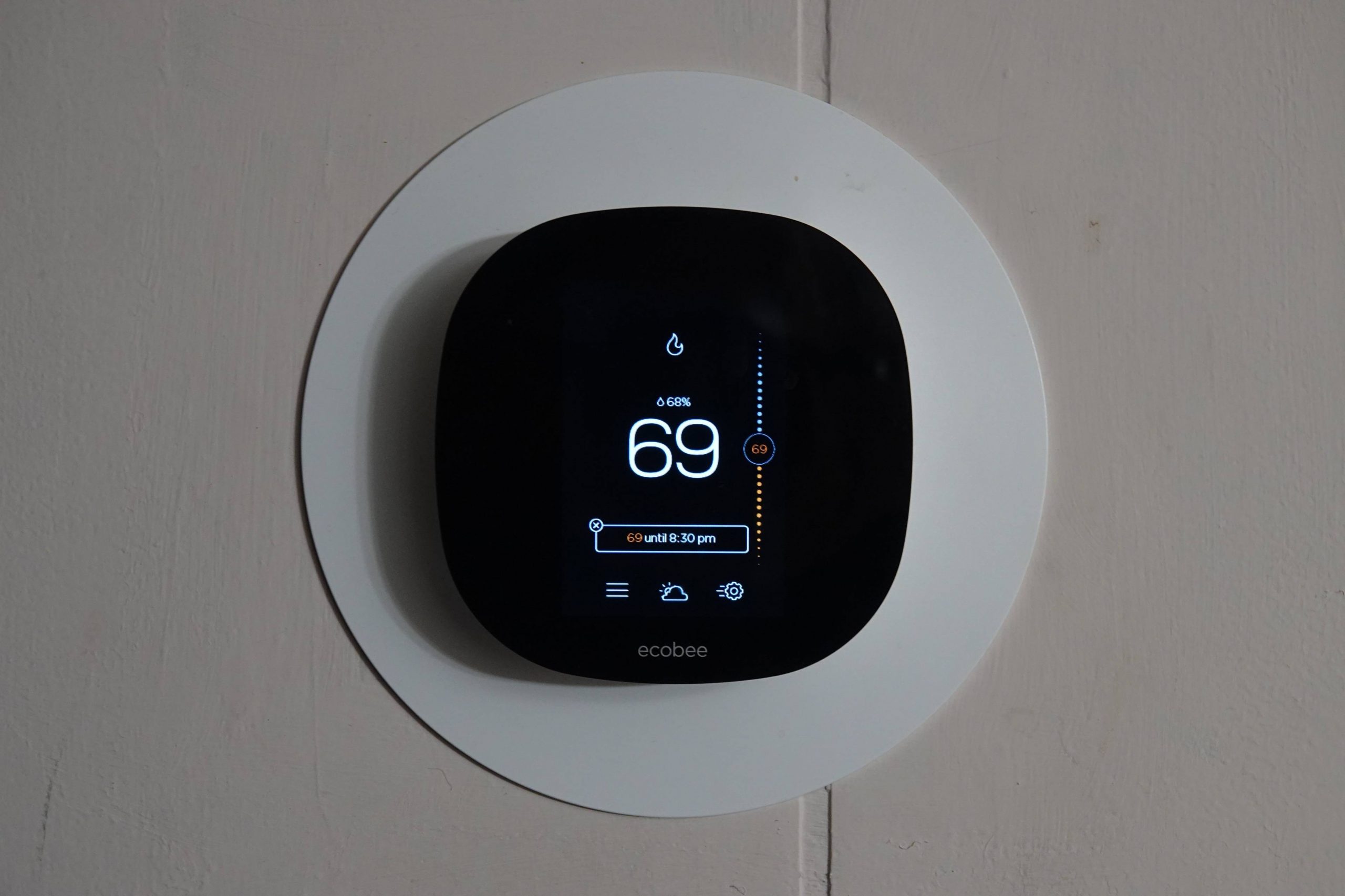
A programmable thermostat follows a schedule you set. A smart thermostat adds connectivity and some form of automatic adjustment.
The features that distinguish them:
- Remote control from your phone, anywhere
- Learning — adapting to the patterns it observes rather than requiring programming
- Geofencing — adjusting based on whether phones are home
- Energy reporting — showing runtime and usage over time
- Remote sensors — measuring temperature in rooms other than the hallway where the thermostat lives
- Maintenance reminders for filter changes and service
Not every model has all of these, and not all of them matter equally.
Where the Savings Actually Come From
The mechanism is simple: heating or cooling an empty house wastes energy, and a smart thermostat is better than most people at not doing that.
In Ottawa, the winter setback opportunity is large because the temperature difference between indoors and outdoors is large. Lowering the setting while everyone is out or asleep, then recovering before anyone notices, is where the meaningful savings sit.
The critical caveat: you only save relative to what you were doing before. If you already set back manually and consistently, a smart thermostat automates a habit you had rather than creating new savings. If you leave the thermostat at one temperature year-round, the improvement can be substantial.
Where the Savings Don’t Come From
A few honest limits worth knowing:
A smart thermostat doesn’t make your furnace more efficient. It changes when the equipment runs, not how well it runs. A poorly maintained furnace is still a poorly maintained furnace.
It doesn’t fix comfort problems caused by ductwork or insulation. If your upstairs is cold because the ducts don’t serve it well, a smarter thermostat still can’t send air where the ducts don’t go — though remote sensors can at least stop the system from ignoring the problem room entirely.
And for households where someone is always home, the setback opportunity is much smaller, so the payback is longer.
Compatibility: The Thing to Check First
Before buying anything, confirm it works with your system. The most common issue in older Ottawa homes is the C-wire — a common wire that provides continuous power. Many smart thermostats need one, and plenty of older installations don’t have one run to the thermostat location.
Solutions exist — some models include an adapter, some can run without a C-wire, and a technician can run one — but it’s better to know before the box is open.
Other compatibility questions: multi-stage furnaces need a thermostat that supports staging, heat pumps need one that handles auxiliary heat properly, and dual-fuel systems need explicit support for switching between heat sources. Professional thermostat installation service in Ottawa confirms compatibility before anything gets purchased.
Heat Pumps Change the Calculation
If you have or are considering a heat pump, thermostat choice becomes more important rather than less.
Heat pumps work best with steady, moderate operation. Deep setbacks can actually cost more, because recovering a large temperature drop may trigger expensive auxiliary electric heat — wiping out the savings from the setback.
A thermostat designed for heat pump control manages this intelligently, recovering gradually to avoid calling for backup heat. A basic thermostat treats the heat pump like a furnace and can drive up your bills. Anyone exploring heat pump installation in Ottawa should treat the thermostat as part of the system, not an accessory.
Features That Matter in an Ottawa Winter
Ranked by practical value here:
- Remote sensors. Ottawa homes with cold bedrooms benefit enormously from letting the system respond to where people actually are.
- Freeze alerts. A notification that indoor temperature is dropping unexpectedly — because your furnace failed while you’re away in January — can prevent burst pipes.
- Remote access. Turning the heat up from the car on the way back from a weekend away is genuinely useful in winter.
- Smart recovery. Reaching your target temperature by the time you want it rather than starting to heat at that moment.
- Energy reporting. Useful mainly for spotting a system that’s running far more than it used to — often the first sign of a developing problem.
Voice control and elaborate app design are pleasant, but they aren’t what saves you money.
Installation: DIY or Professional?
Many smart thermostats are designed for homeowner installation, and if you have a straightforward single-stage furnace with a C-wire present, it’s a manageable job.
Call a professional if you have a multi-stage or variable-speed system, a heat pump or dual-fuel setup, no C-wire, unusual or unlabelled wiring, or a system with a zoning panel. Miswiring a thermostat can damage control boards, and that repair costs considerably more than the installation would have.
If you’re unsure, an assessment through HVAC services in Ottawa will tell you quickly which category you’re in.
So — Are They Worth It?
For most Ottawa households, yes, with conditions.
Strongest case: the house is empty on a predictable schedule, you currently don’t set back consistently, you have a forced-air system with a C-wire, and you have rooms that run at different temperatures.
Weakest case: someone is home essentially all the time, you already manage setbacks manually, and your home is small with even temperatures throughout. The thermostat will still be convenient — just don’t expect it to pay for itself quickly.
Frequently Asked Questions
Will a smart thermostat work with my old furnace?
Usually, as long as it’s a standard low-voltage forced-air system. The most common obstacle is the missing C-wire in older Ottawa homes, which some models work around and others don’t. Millivolt systems and certain proprietary controls aren’t compatible with most smart thermostats — worth confirming before purchasing.
How much can I actually save?
It depends entirely on your starting behaviour. Households that previously left the thermostat at one temperature around the clock see the largest improvement; households already practising disciplined setbacks see very little, because the thermostat is automating what they were already doing. Your own habits are the biggest variable in the estimate.
Do I need a C-wire?
Many models do, and a few don’t. The C-wire supplies continuous low-voltage power so the thermostat can stay connected without draining its battery. If yours isn’t present, options include a model that doesn’t require one, an included power adapter, or having a technician run the wire during installation.
Should I set back the temperature at night in winter?
With a furnace, yes — overnight setbacks save energy and most people sleep better cooler. With a heat pump, be careful: deep setbacks can trigger auxiliary electric heat during recovery and cost more than they save. Use a thermostat designed for heat pump control and keep setbacks moderate.
Can a smart thermostat tell me when my furnace has a problem?
Indirectly. Most track runtime and can alert you to unusual patterns — a system running far longer than normal to hold the same temperature often indicates a developing issue. They also send filter reminders and low-temperature alerts. They aren’t diagnostic tools, but they can prompt a service call earlier than you’d otherwise make one.
Final Takeaway
A smart thermostat is a good investment for most Ottawa homes, particularly ones that sit empty on a predictable schedule and don’t currently use setbacks. The savings come from not conditioning an empty house, and our winters make that opportunity larger than it is in milder places.
Check compatibility first — especially the C-wire and heat pump support. The right thermostat matched to your system beats the most expensive one on the shelf.
Get a Smart Thermostat Installed in Ottawa
Ultra Air Heating & Cooling
53 Kinetic Way, Ottawa, ON K2J 0E1
Phone: (613) 762-3035
Book Online: ultraairhvac.ca/contact-us
Wondering which smart thermostat suits your system? Contact Ultra Air today and we’ll confirm compatibility, recommend a model, and install it properly.