If your furnace or air conditioner starts up, runs for a few minutes, shuts down, then fires up again shortly after, you’re watching short cycling. It’s easy to dismiss as a quirk — the system is still heating or cooling, after all. But HVAC short cycling in Ottawa homes wastes energy, wears out equipment, and usually signals a problem that’s getting worse.
Here’s what causes it, why it does real damage, and how to tell whether what you’re seeing is short cycling or normal operation.
What Short Cycling Actually Is
A normal heating or cooling cycle lasts long enough for the system to reach steady operation — generally ten to twenty minutes or more, depending on conditions. Short cycling means cycles that end well before that, often within a few minutes, repeating frequently.
The distinction matters because HVAC equipment is least efficient during startup. Motors draw peak current, the heat exchanger or coil takes time to reach operating temperature, and airflow takes time to stabilize. A system that shuts down before reaching steady state spends a disproportionate share of its runtime in the least efficient phase.
Note the exception: in mild weather, short cycles can be normal, because the small load is satisfied quickly. Short cycling on a genuinely cold or hot day is what indicates a problem.
Cause 1: The System Is Oversized
This is the most common structural cause and the hardest to fix after the fact. Equipment with more capacity than the home needs satisfies the thermostat quickly and shuts off, then repeats.
Oversizing usually traces back to installation — a contractor who sized by rule of thumb, matched the old unit without checking, or deliberately went bigger “to be safe.” It’s common enough that we see it regularly in homes with otherwise well-installed systems.
If short cycling has been happening since the system was new, and no component has failed, oversizing is the likely explanation. Options are limited short of replacement, though staging controls and variable-speed equipment help on some systems.
Cause 2: Restricted Airflow
When airflow is restricted, heat builds up where it shouldn’t. A furnace responds by tripping its high-limit switch — a safety device that shuts the burners off before the heat exchanger overheats. The blower keeps running, temperature drops, the burners relight, and the cycle repeats.
The usual culprits are a clogged filter, closed or blocked registers, undersized return ducts, or a failing blower motor.
This one is worth taking seriously. Repeated high-limit trips stress the heat exchanger, and a cracked heat exchanger is both an expensive repair and a carbon monoxide risk. If your furnace is short cycling, checking the filter should be immediate, and if that doesn’t resolve it, furnace repair in Ottawa is the right next step.
Cause 3: Thermostat Problems
A thermostat that misreads temperature will cycle the system incorrectly. Common issues:
- Bad location — mounted in direct sunlight, above a heat register, near a draughty door, or on an exterior wall
- Dirt or age affecting the sensor
- Wiring faults creating intermittent connections
- Differential set too tight, cycling on tiny temperature changes
Thermostat causes are worth ruling out early, because they’re among the least expensive to fix. A thermostat in a bad location can sometimes be relocated for far less than the cost of chasing the problem elsewhere.
Cause 4: Low Refrigerant (Cooling Systems)
On an air conditioner or heat pump, low refrigerant causes pressures to fall outside the normal range, and safety controls shut the compressor down. Pressure equalizes, the system restarts, and the cycle repeats.
As always with refrigerant: a low charge means a leak. The leak needs finding and repairing, not just topping up. Short cycling combined with weak cooling and possible icing is a fairly clear refrigerant signature, and it calls for AC repair in Ottawa.
Cause 5: Electrical and Control Faults
A failing capacitor, a worn contactor, a flame sensor coated in residue, a faulty control board, or a loose connection can all cause a system to shut down prematurely and restart.
A dirty flame sensor is a particularly common one on furnaces. The sensor confirms the burner has lit; when it’s coated in oxidation, it stops detecting flame, and the furnace shuts down as a safety measure — usually a minute or two after lighting. It’s an inexpensive fix, and it’s often mistaken for something far more serious.
Cause 6: A Clogged Condensate System
On cooling systems, a full drain pan trips the safety float switch and shuts the system down. As water drains slowly past the clog, the switch resets and the system restarts — then fills and trips again.
The pattern here is distinctive: cycles that are irregular rather than evenly spaced, often accompanied by water around the indoor unit. Clearing the drain resolves it.
Why It Does Real Damage
Short cycling isn’t just inefficient. The specific harms:
- Compressor and motor wear. Starting is the hardest thing these components do. Multiplying the number of starts multiplies the wear.
- Poor humidity control in summer, because dehumidification requires sustained runtime.
- Uneven temperatures, because air never circulates long enough to mix.
- Higher bills, since the system spends its time in the least efficient part of the cycle.
- Heat exchanger stress on furnaces cycling from high-limit trips — the most serious consequence.
A system that short cycles for years will not last as long as one that doesn’t.
What to Check Before Calling
Two things are worth doing yourself: replace the air filter if it’s dirty, and confirm that supply and return registers are open and unobstructed. Together these resolve a meaningful share of airflow-related short cycling.
Also check whether the thermostat is somewhere sensible — not in sun, not above a register, not beside a door that opens outside.
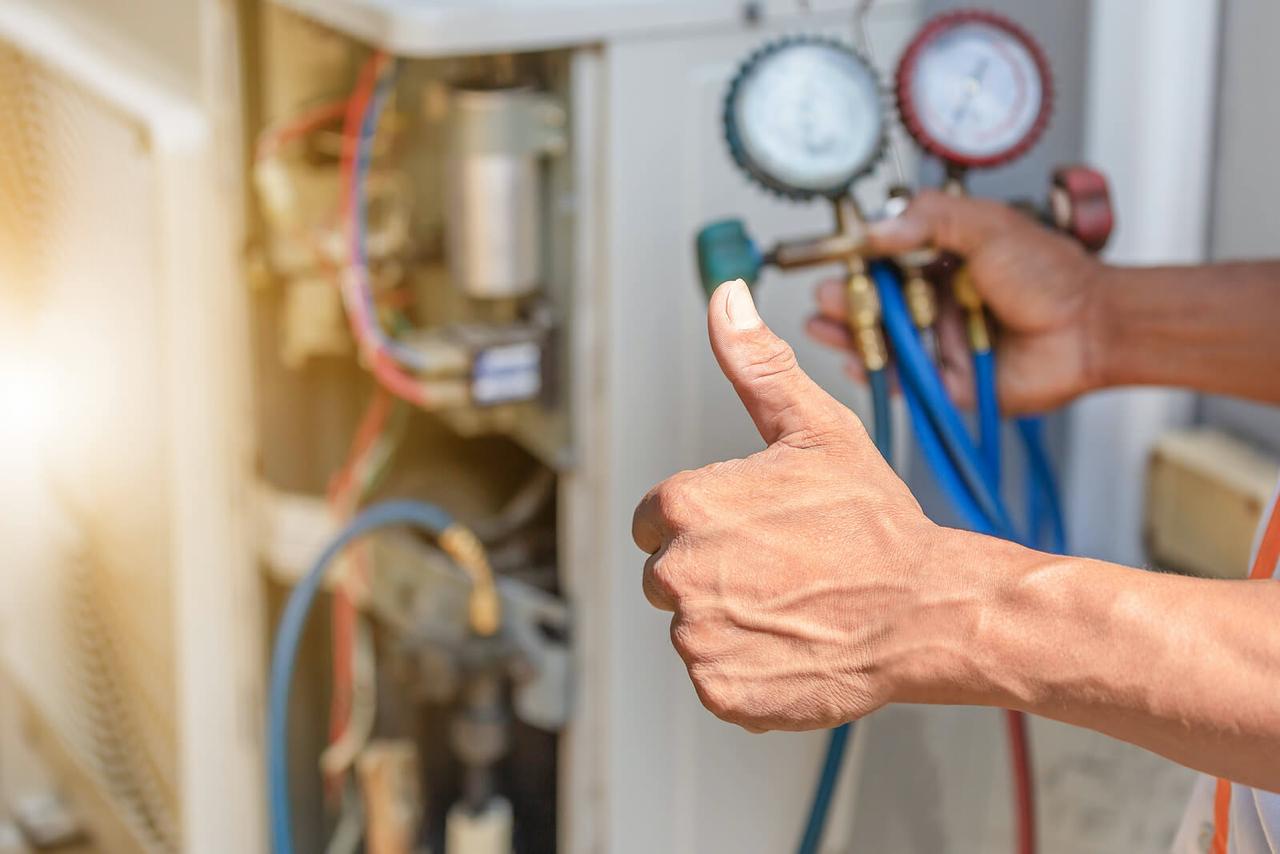
Beyond that, diagnosis needs measurement. A technician checks static pressure, temperature rise across the heat exchanger or coil, refrigerant pressures, and electrical values. Guidance on HVAC short cycling in Ottawa can help you describe the pattern accurately when you book, which speeds up the diagnosis.
Frequently Asked Questions
How long should a normal heating or cooling cycle last?
Generally ten to twenty minutes or longer under typical load, with two or three cycles per hour. On very cold or very hot days a correctly sized system may run almost continuously, which is normal and desirable. Cycles ending after two or three minutes on a demanding day indicate a problem.
Is short cycling dangerous?
It can be on a furnace. Cycling caused by high-limit trips means the heat exchanger is repeatedly overheating, and over time that contributes to cracking — which is a carbon monoxide risk. On cooling equipment the risk is to the equipment rather than to people, but the wear is real. Either way, it shouldn’t be left unaddressed.
Can a dirty filter really cause short cycling?
Yes, and it’s one of the most common causes. A clogged filter restricts airflow enough that a furnace overheats and trips its safety limit, or an AC coil gets too cold and the system shuts down. It’s always worth checking first because it’s free to rule out and frequently turns out to be the answer.
My system only short cycles in mild weather. Is that a problem?
Usually not. In mild conditions the heating or cooling demand is small, so the thermostat is satisfied quickly and the system shuts off — that’s normal behaviour, not a fault. The concerning pattern is short cycling on genuinely cold or hot days when the system should be running long, steady cycles.
Can short cycling be fixed, or do I need a new system?
Most causes are repairable — airflow restrictions, thermostat issues, dirty sensors, refrigerant leaks, and drain clogs are all fixable. The exception is a system that’s substantially oversized for the home, where the mismatch is structural. Even then, staging controls or a variable-speed upgrade can help before replacement becomes the only option.
Final Takeaway
Short cycling is a symptom worth investigating rather than tolerating. Some causes are trivial — a filter, a dirty flame sensor, a badly placed thermostat. Others point to oversized equipment or a refrigerant leak.
Start with the filter and the vents. If the pattern continues on a genuinely cold or hot day, get it diagnosed before the wear turns into a failure.
Diagnose Short Cycling in Your Ottawa Home
Ultra Air Heating & Cooling
53 Kinetic Way, Ottawa, ON K2J 0E1
Phone: (613) 762-3035
Book Online: ultraairhvac.ca/contact-us
System turning on and off constantly? Contact Ultra Air today for a proper diagnosis — and a fix that addresses the cause rather than the symptom.